You bought the EV. Now the garage needs to keep up, and the quotes you are seeing online are all over the map.
Here is the short answer: the typical EV charger installation cost for a Level 2 home charger runs about $750 to $2,500 installed, with national averages near $1,700, before any panel upgrade. If your panel is maxed out, add roughly $1,500 to $5,000. The federal 30C tax credit that used to cut that bill ended for chargers placed in service after June 30, 2026, so rebates from your utility now matter more than ever.
This guide breaks the EV charger installation cost into its real pieces for homes in Elizabeth, Parker, Castle Rock, and the rest of Elbert and Douglas County.
Key takeaways
- A Level 2 home charger typically costs $750 to $2,500 installed; hardware is usually $300 to $900 of that.
- Distance from the panel and panel capacity drive most of the price swing.
- The federal 30C credit is gone for chargers placed in service after June 30, 2026.
- Xcel Energy customers may qualify for a charger and wiring rebate; CORE Electric Cooperative currently offers an annual bill credit, not a hardware rebate.
- A permit and inspection are part of a legit install in Colorado.
What Is the Typical EV Charger Installation Cost in 2026?
Most Colorado homeowners land between $750 and $2,500 for a Level 2 charger, all in. According to installer network Qmerit, the national average is about $1,700, with panel capacity and wire distance as the two biggest cost drivers.
Here is how that total usually splits:
| Cost component | Typical range (2026) | What drives it |
|---|---|---|
| Level 2 charger hardware | $300 to $900 | Brand, amperage, smart features |
| Labor and materials | $500 to $1,700 | Wire run length, conduit, wall finishes |
| Permit and inspection | $50 to $800 (Denver metro often $100 to $300) | Your county or town |
| Panel or service upgrade (if needed) | $1,500 to $5,000+ | Panel age, service size, utility work |
| Level 1 (120-volt) setup | $0 to a few hundred | Usually just a dedicated outlet |
These are research-based national and Colorado ranges, not a Hey Dude price quote. The only way to pin down your actual EV charger installation cost is an on-site look at your panel and garage.
Level 1 vs. Level 2: which one do you need?
Level 1 uses a standard 120-volt outlet and adds about 5 miles of range per hour, per the U.S. Department of Energy. Level 2 runs on 240 volts and adds about 25 miles per hour.
If you drive 20 miles a day, Level 1 can work. If you commute from Elizabeth to the Tech Center or tow on weekends, Level 2 is the real answer, and it is what almost every EV charger installation cost figure in this guide refers to.
Charger Hardware vs. Install Labor: Where the Money Goes
On a simple job, hardware and labor split your EV charger installation cost close to 50/50. On a complicated job, labor and materials take over fast.
Hardware
Most quality Level 2 units sell for $300 to $900. Tesla’s home charging page lists the Wall Connector at $585 and estimates installation at $750 to $1,500, which gives you a solid benchmark for tesla wall connector installation cost. A hardwired unit and a plug-in unit (on a NEMA 14-50 outlet) cost about the same; hardwired is often cleaner and avoids outlet wear.
Labor and materials
Labor covers pulling the circuit, mounting the charger, and making it pass inspection. Materials include copper wire, conduit, a two-pole breaker, and mounting hardware. Copper is the priciest material in most EV charger installation cost estimates, and heavier wire costs more per foot.
How Distance From the Panel Changes Your EV Charger Installation Cost
Distance is the single easiest thing to predict. A charger mounted on the same garage wall as the panel might need 10 feet of wire; a charger on the far side of a three-car garage or a detached shop can need 60 to 150 feet or more.
Longer runs add cost in three ways:
- More copper. A 60-amp circuit needs heavy-gauge wire, and every extra foot shows up on the bill.
- More conduit and labor. Finished basements, drywall, and exterior runs take more time.
- Trenching. Detached garages and barns, common on acreage near Franktown and Kiowa, may need a buried feed.
If you want to trim your EV charger installation cost, put the charger as close to the panel as your parking setup allows. A 24-foot cable (standard on many units) gives you room to play.
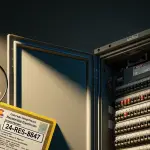
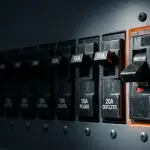
Panel Capacity and Load Calculation: Do You Need an Upgrade?
Maybe not. A licensed electrician runs a load calculation on your home to see if there is room for a 40-amp to 60-amp EV circuit on top of your existing loads.
EV charging counts as a continuous load under the National Electrical Code, which Colorado adopted in its 2023 edition effective August 1, 2023. That means the circuit must be sized at 125% of the charger’s draw. A 48-amp charger needs a 60-amp circuit, not a 50.
Signs your panel may need work
- You have a 100-amp service and electric heat, an electric range, or a well pump.
- There are no open breaker spaces.
- The panel is an older brand with known problems or visible damage.
- You also plan a heat pump, shop, or second EV soon.
Options before a full upgrade
Many chargers can be dialed down to a lower amperage, and a load management device can pause charging when the house is busy. That can keep your EV charger installation cost in the low four figures instead of adding a service upgrade. If a new panel is the smart call, it is usually the right time to add whole-home surge protection, which current code requires when a dwelling service is replaced.
Permits and Inspection: What Colorado Requires
A new 240-volt circuit for an EV charger needs an electrical permit and inspection in Colorado. Your permit goes through Elbert County, Douglas County, or your town’s building department, depending on your address.
Permit fees vary, but they are a small slice of the total EV charger installation cost. Skipping the permit can bite you later with an insurance claim, a failed home sale inspection, or a utility rebate that requires proof of a permitted install.
The Federal 30C Credit Ended June 30, 2026
The federal tax credit for home EV chargers is no longer available for new installs. The Section 30C credit covered 30% of the cost, up to $1,000 for home chargers, but recent federal law moved its end date from 2032 to June 30, 2026.
The IRS instructions for Form 8911 confirm that property placed in service after June 30, 2026 does not qualify. The charger also had to sit in an eligible census tract.
If your charger was installed and working on or before June 30, 2026, and your address qualified, talk to your tax preparer about claiming it on your 2026 return. For any install after that date, plan your EV charger installation cost budget without it.
EV Charger Rebates in Colorado Right Now
Your utility is now the main place to look for savings. What you can get depends on who delivers your power.
- Xcel Energy: Xcel offers an EV Charger and Wiring Rebate for Colorado residential customers, with higher amounts for income-qualified households. The state’s EV Colorado site lists it at up to $1,300 toward home wiring. Program rules have changed several times, so confirm the current amount and any rate-plan requirement on Xcel’s site before you book.
- CORE Electric Cooperative: CORE’s COREV Connect program pays a $15 annual credit for connecting a compatible EV to its network. Its COREV Charge program is at capacity and not accepting new applications.
- State funding: The Colorado Energy Office’s EV Home Charge program funds panel and wiring rebates through co-ops and municipal utilities. Its next application round for utilities opens October 5, 2026, so new member rebates could follow.
Check your rebate before the work starts, since it can knock a real chunk off your EV charger installation cost. Some programs require specific chargers or pre-approval.
Local Factors: Cold, Altitude, and Garages Along the Front Range
Colorado weather adds a few wrinkles that a flat national estimate ignores. None of them are deal-breakers; they just shape where and how the charger goes in.
Cold weather and charging
Cold batteries charge slower and lose range. Charging overnight in a garage helps, and scheduling a charge to finish right before you leave warms the battery for a Parker or Castle Pines winter morning.
Garage and exterior installs
Pick a charger rated for outdoor use if it will live on an exterior wall or in an unheated detached garage. Mount it where snow, plows, and bumpers will not hit it.
Lightning and rural service
Front Range summer storms are hard on electronics. Surge protection is a smart add, and rural homes near Elbert and Larkspur often have long service runs or older ranch-style panels that deserve a close look during the load calculation.
New builds in Castle Rock and Parker
Many newer homes in Castle Rock and Parker subdivisions have 200-amp service and room in the panel, which usually keeps the EV charger installation cost on the lower end.
Frequently Asked Questions
How much does it cost to install an EV charger at home?
The typical EV charger installation cost for a home Level 2 charger is $750 to $2,500, with national averages near $1,700. That usually includes $300 to $900 for the charger itself plus labor, wire, and a permit. A panel or service upgrade can add $1,500 to $5,000 or more. Your actual price depends on panel capacity and how far the charger sits from the panel.
Is the federal tax credit for EV chargers still available?
No, not for new installs. The Section 30C credit, worth 30% of cost up to $1,000 for home chargers, ended for property placed in service after June 30, 2026. If your charger was installed and working by that date in an eligible census tract, you may still claim it on your 2026 return using IRS Form 8911.
Do I need a panel upgrade for a Level 2 charger?
Not always, though a panel upgrade is the biggest swing factor in EV charger installation cost. An electrician runs a load calculation to see whether your panel has room for a 40-amp to 60-amp circuit. Many 200-amp homes do. Older 100-amp homes with electric heat, a well pump, or an electric range may need an upgrade, or a load management device that pauses charging when the house is using a lot of power.
What size breaker does a 48-amp EV charger need?
A 48-amp EV charger needs a 60-amp breaker and matching wire. The National Electrical Code treats EV charging as a continuous load, so the circuit must be rated at 125% of the charger’s output. Many chargers let the installer set a lower output, such as 32 or 40 amps, if your panel has less room.
How much does a Tesla Wall Connector installation cost?
Tesla lists the Wall Connector at $585 and estimates installation at $750 to $1,500. Denver-area installs commonly land between $800 and $2,500 total. The price climbs with long wire runs, finished walls, or a detached garage. It also climbs if your panel needs an upgrade to support a 60-amp circuit.
Is a Level 1 charger enough?
Level 1 is enough if you drive fewer than about 30 to 40 miles a day. It uses a standard 120-volt outlet and adds roughly 5 miles of range per hour, per the U.S. Department of Energy. Overnight, that covers a short commute. Long commutes, cold winters, and road trips make Level 2 the better fit.
Do you need a permit to install an EV charger in Colorado?
Yes. A new 240-volt EV charger circuit requires an electrical permit and inspection in Colorado. In the Elizabeth and Parker area, the permit runs through Elbert County, Douglas County, or your town’s building department, depending on your address. A licensed electrician normally pulls the permit and schedules the inspection as part of the job.
Are there EV charger rebates in Elbert County or Douglas County?
It depends on your utility. Xcel Energy offers a charger and wiring rebate to eligible Colorado residential customers. CORE Electric Cooperative, which serves much of Elbert and Douglas County, currently offers a $15 annual COREV Connect credit rather than a hardware rebate. Check your utility’s current rules before installing, since some rebates require pre-approval.
How long does a home EV charger installation take?
A straightforward home EV charger installation usually takes about half a day. Long wire runs, trenching to a detached garage, or a panel upgrade can stretch the job to a full day or more. A panel or service upgrade may also need your utility to disconnect and reconnect power, which adds scheduling time.
Who installs EV chargers near Elizabeth, Parker, and Castle Rock?
Hey Dude Electrical Service installs home EV chargers across Elizabeth, Parker, Castle Rock, Franktown, Kiowa, and the surrounding area. The crew is based in Elizabeth, Colorado, is Colorado-licensed and fully insured, and offers free on-site quotes. Call (303) 656-6349 to schedule a look at your panel and garage.
Get Your Real EV Charger Installation Cost From a Local Crew
Online ranges get you in the ballpark. A walk-through of your panel, your garage, and your wire path gets you a real number, and that is what we do.
Hey Dude Electrical Service is based in Elizabeth, Colorado, and handles EV chargers, panel upgrades, and everything else on the residential electrical side of the house. We are Colorado-licensed, fully insured, and build every install to pass inspection the first time. No subcontractor runaround, no finger-pointing, just clean work.
Want a straight answer on your EV charger installation cost? Call us at (303) 656-6349 for a free on-site quote in Elizabeth, Parker, Castle Rock, Franktown, Kiowa, Elbert, Castle Pines, Larkspur, and nearby. Hey dude. We got the power.